

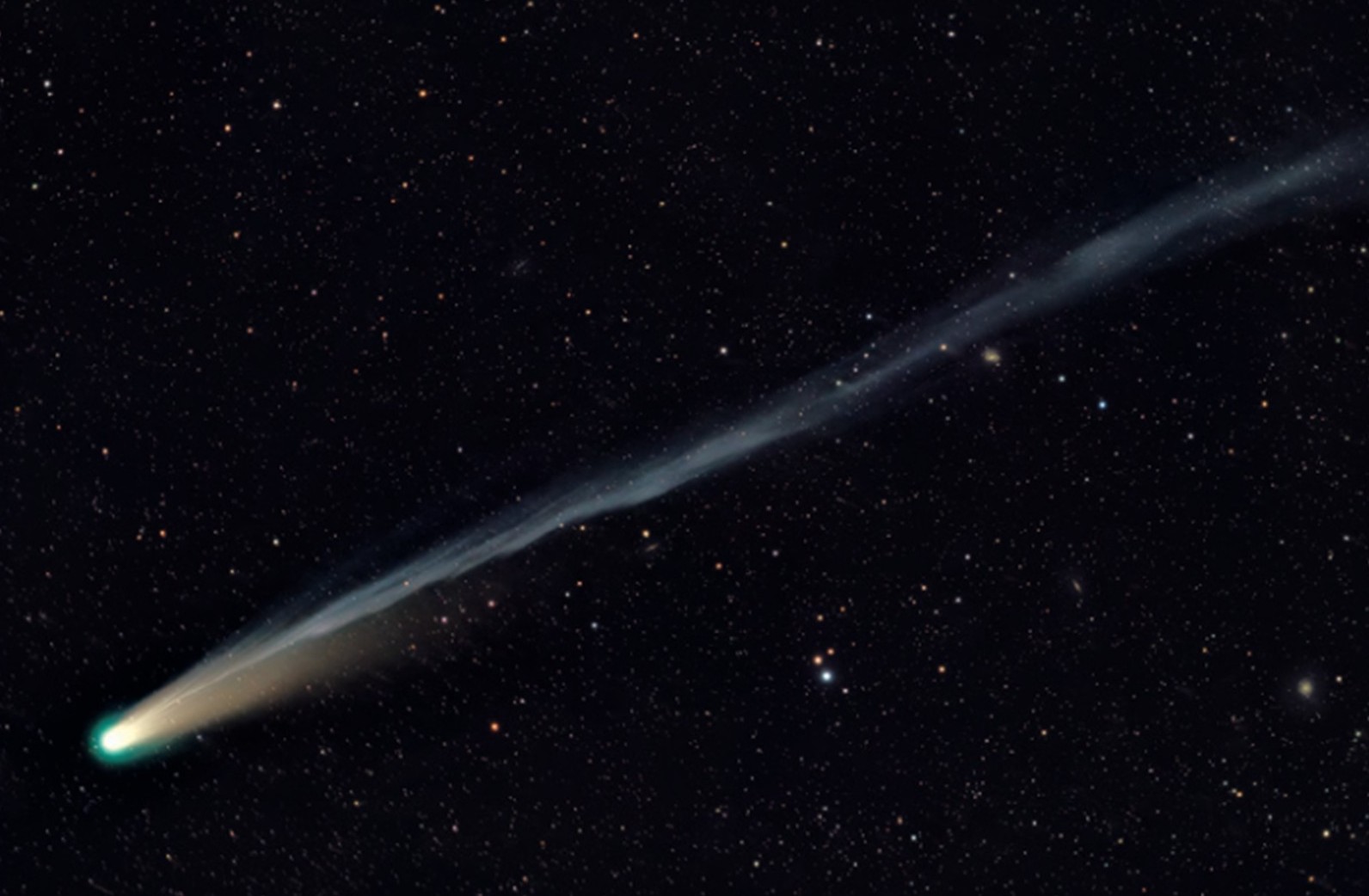
There are two comets, C/2025 A6 (Lemmon) and C/2025 R2 (Swan), currently visible in the Northern Hemisphere sky, though binoculars are needed to see them. They were both expected to be at their brightest between October 20 and 21, peaking with the Orionid meteor shower. But they will continue to be visible until late November for Lemmon and early November for Swan.
Comet Lemmon is visible in the north to northwest sky after sunset and Comet Swan is visible in the Southwest sky near the Milky Way after sunset.
You might wonder why the comets have odd names like Lemmon and Swan, and what the letters and numbers that precede those names mean. Comets are named with an alpha-numeric system that includes the type of comet, designated by a letter, and the year it was discovered, followed by a letter indicating the half month of the discovery and a number indicating the order of discovery.
For example, for C/2025 A6 (Lemmon), the name indicates it is a non-periodic comet, which
is denoted by C/. That means the comet has an orbit of our solar system that exceeds 200 years,
making viewing such comets a one-in-a-lifetime—if you’re lucky—event. The rest of a comet’s
name is from its discoverer, which may be a person, an observatory, or a spacecraft. C/2025 A6
(Lemmon) was discovered on January 3 this year by the Mount Lemmon Survey Observatory
near Tucson, Arizona.
Comets instill a sense of awe and wonder. And, speaking as a photographer and skywatcher, it’s
challenging to capture an image of a frozen block of ice, dust and rock hurtling through space at speeds around 60 kilometres per second. In the 2 hours that I imaged comet Lemmon last month, the comet covered over half a million kilometres, or the same distance as about 15 times around the earth.
These two comets are the most recent that I have seen. Last year in the fall, Comet Tsuchinshan–
ATLAS was visible to the naked eye after sunset. It made for some great views and photographs.
The brightest comet that I’ve ever seen was Comet Neowise, back in July of 2020. That one
was a truly magnificent sight and made for some great views and photographs.
Comet Lemmon is looking to be the best comet of 2025, so get out and try to see it in the evening
sky until the end of November. It won’t be back for another 1,200 years.
Jason Dain is a skywatcher and birder who regularly contributes articles and photographs to The
Masthead News.
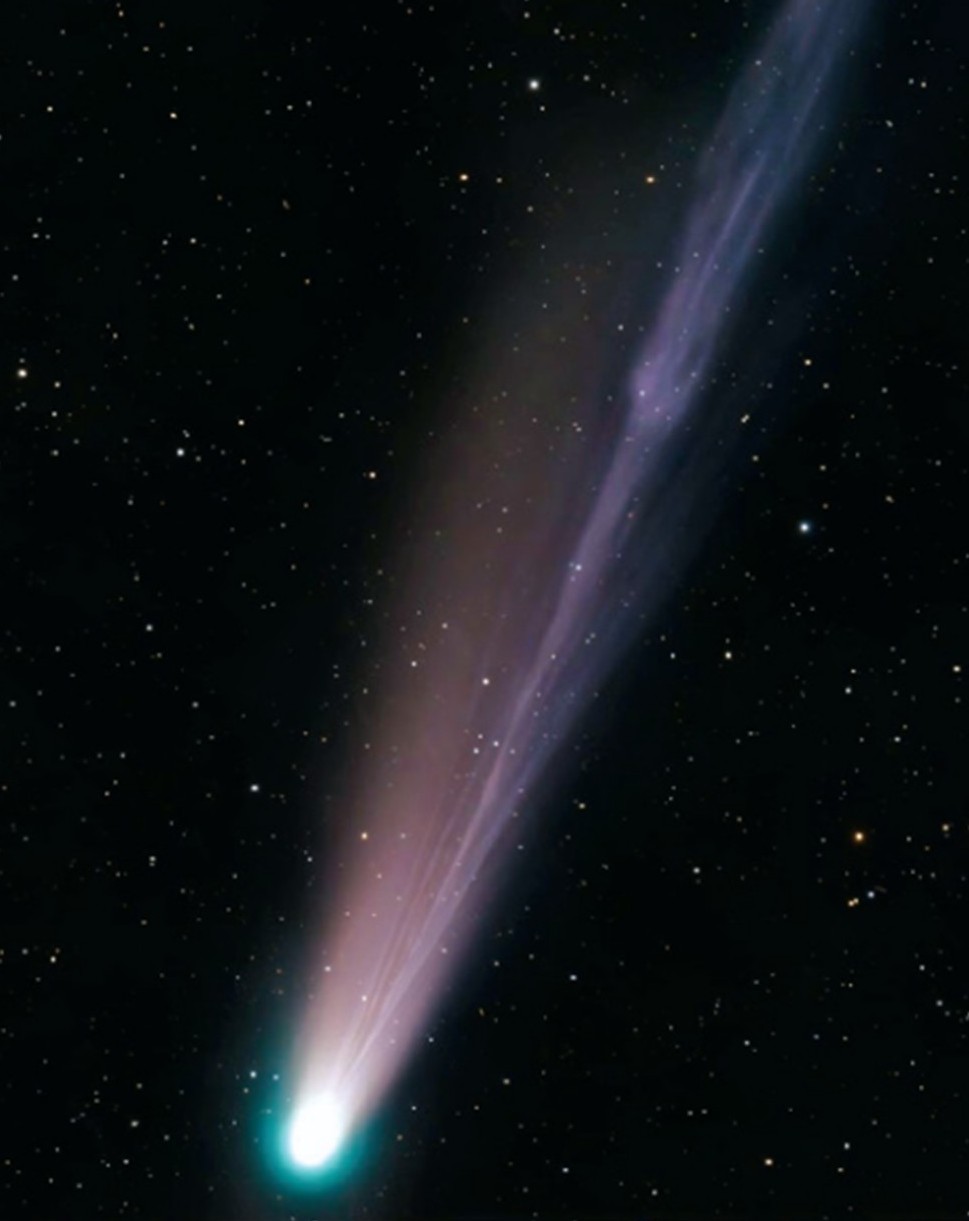
Comet C/2025 A6 (Lemmon) above and comet 31/ATLAS below. Photo credit: Jason Dain