

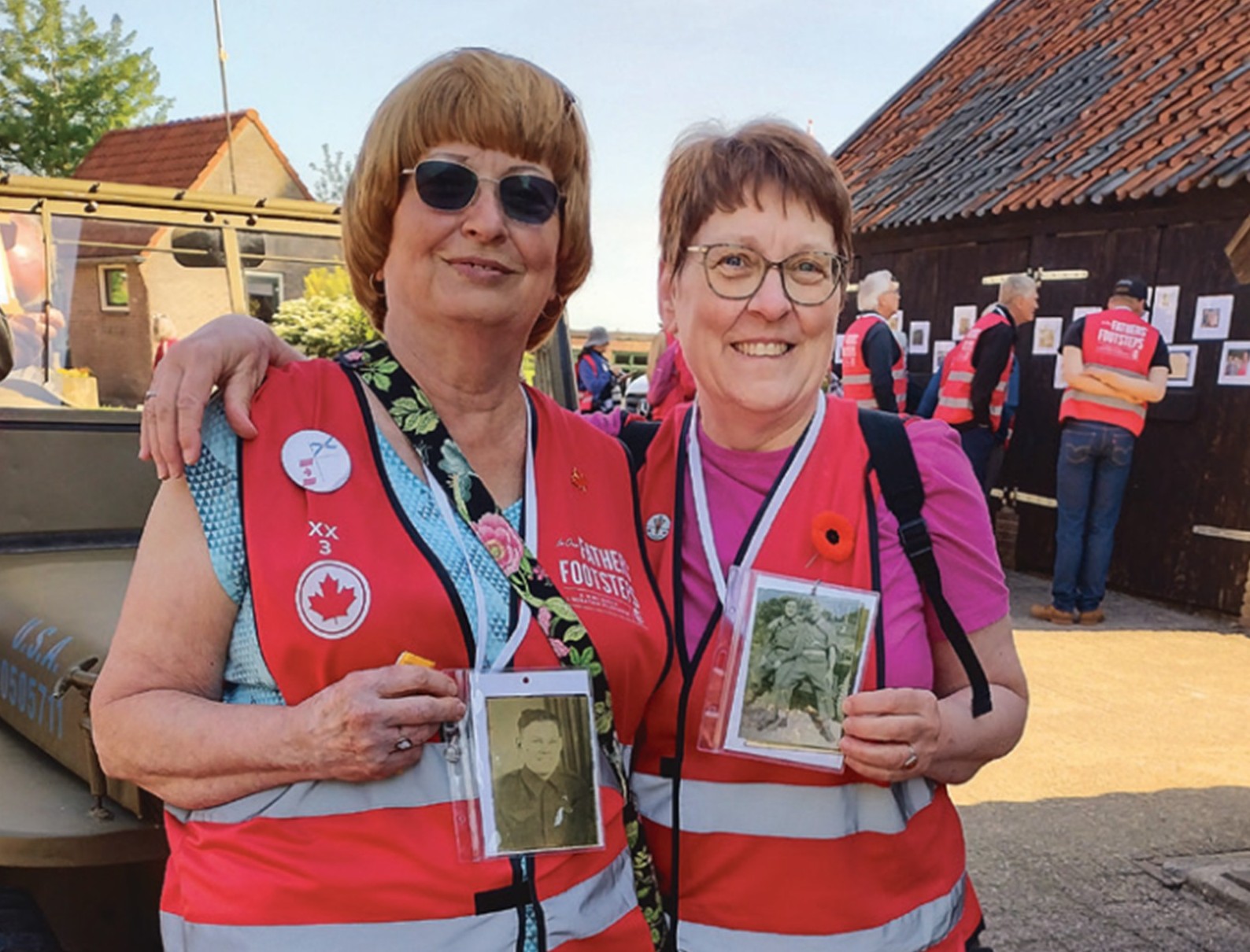
Vicki Smith and Laurie Mason, both of Glen Haven, travelled to the Netherlands this past spring with a group called In Our Fathers’ Footsteps. They were two of hundreds of Canadian descendants of the World War II veterans who helped liberate that country. Smith and Mason’s father, Malcolm “Mac” Smith,
served in the 4th Canadian (Armoured) Division, 5th Anti-Tank Regiment.
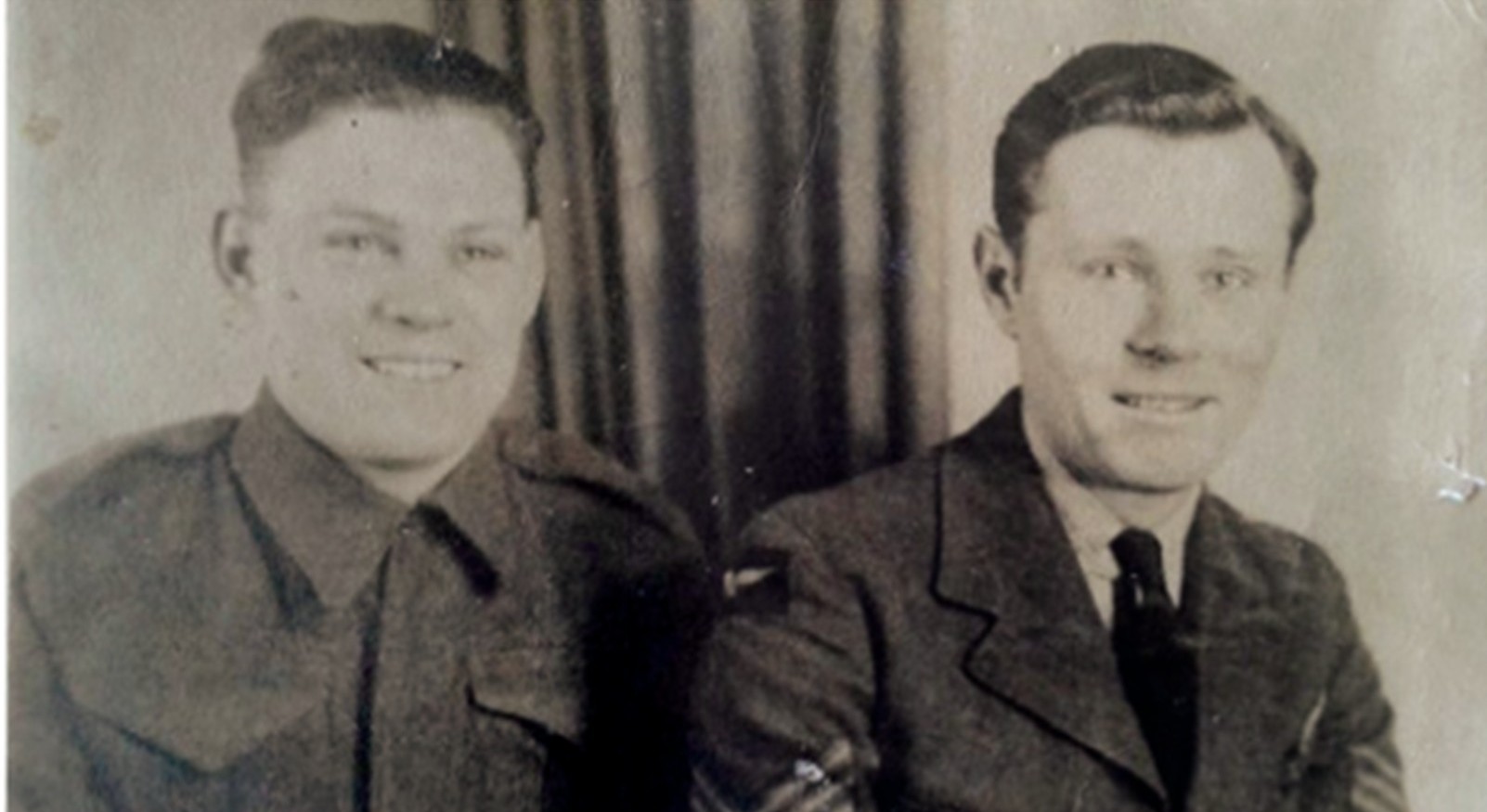
He went off to war “without a care for his own safety”
by Vicki Smith
Growing up, I don’t ever remember Dad talking about the war. In 2005, The Year of the Veteran, there was a lot of media about the war, and this seemed to open him up to talk about his war experiences in the Netherlands, especially the battle for the Scheldt Estuary. In late 2024, I saw that the group In Our Fathers’ Footsteps was organizing a trip from April 27 to May 8 this year for relatives of veterans who helped to liberate the Netherlands. I was determined to go, and when I told my sister Laurie, she was keen as well.
Our group numbered 300, coming from all parts of Canada, and we would literally walk in our fathers’ footsteps.
In the Netherlands, a lot of small towns have memorials where we would lay a wreath and learn about the battle that took place there. Sometimes we were paraded through the town by a pipe band, and the community would come out to greet us and thank us for Canadians having liberated them.
To the Dutch, the Canadians are heroes, and even though we were only descendants of
the soldiers, they treated us like heroes, too.
Remembrance Day in The Netherlands is May 4 and there are ceremonies like we have on November 11. Our group went to the village of Holden to the war cemetery, where 1,500 Canadians are buried. The small town of Holden has only 1,200 occupants, but over half the village volunteers for this ceremony.
Every gravestone is immaculately kept, with classes from the local schools assigned to a row for
upkeep each year.
The next day was Liberation Day, a day celebrated as a joyous occasion, with parades, music and festivals. We all wore lanyards with pictures of our fathers, and people would stop and ask about them and thank us again for liberating them.
To be in the Netherlands, walking where my father walked, was a wonderful experience, and to see pictures of the destruction during the war, comparing it to the beautiful country that was rebuilt afterwards, was amazing. This trip made me reflect on Dad as a young man, going off to war without a care for his own safety. Looking back as an adult, I can see how the war affected him and how he lived with PTSD for the remainder of his life.
Dad talked fondly of the Dutch people and their gratitude to the
Canadians. It was heartwarming to see that they still remember us with that gratitude.
Making sure fallen Canadians “will never be forgotten”
by Laurie Mason
On our trip to the Netherlands, we found that the Dutch people are friendly and loved the fact that all of us were related to Canadians who fought in World War II. At all the stops we walked through, people lined the streets and waved and yelled “Thank you!” It was overwhelming to hear. Our group took various
souvenirs, such as pins or flags, and gave them out as we marched through villages. My sister Vicki took Canadian dimes and explained to the children about how the famous Bluenose was from our province.
There is still a lot of farming in the Netherlands, and the land is well protected by the new higher dykes, built after the other dykes were destroyed in the war. The Dutch planted trees along the tops of the dykes to help reinforce them. The trees came from four different countries to represent those nations that helped liberate the country.
Most of the Canadian cemeteries have pictures of the servicemen beside the headstones. The people in those communities are trying to have photos for all, so the fallen Canadians will never be forgotten.
We visited a farmstead, which had been owned by the same family for generations. They had to move out when the German army took over their homestead as their headquarters for that area. The family had displays of pictures and refreshments for us. It was such a kind thing for one family to do for the Canadian visitors. Dad served from the beginning of the war until the very end, landing in France on the third day after D-Day.
He didn’t speak of his war years very often, but all seven of his children are very proud of his service. He always told us that the people of the Netherlands were so good to them when the war was over. He especially liked the chocolate they were given.
In Our Fathers’ Footsteps sort of says it all. It felt wonderful to be where he had been. And seeing
all those graves made us grateful that he was one of the lucky ones to return home.
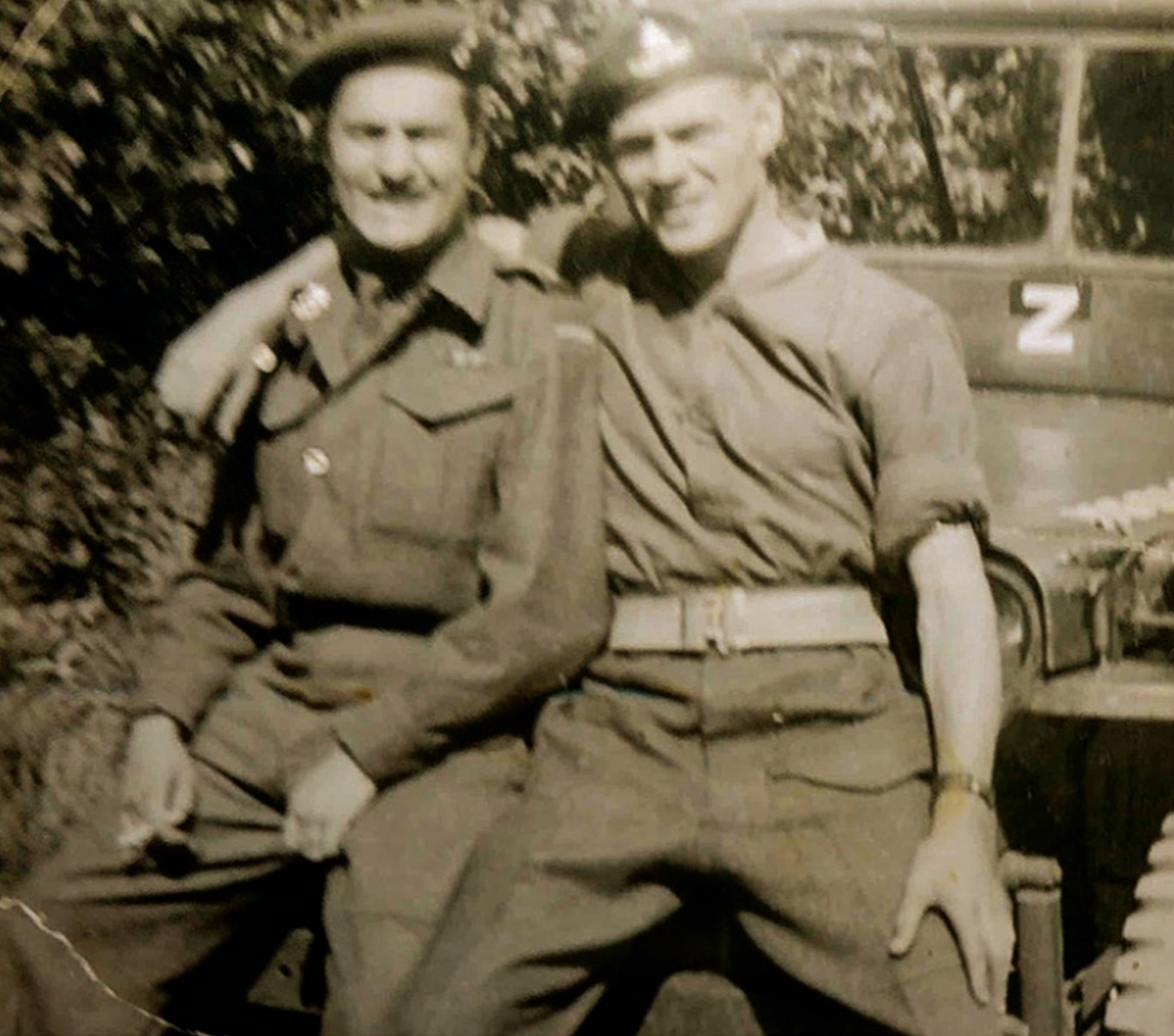
Mac Smith (right) and his friend and fellow Canadian solider Ralph DeGruchy, in the Netherlands during
World War II.